Start with the product and release.
Define the product boundary, intended purpose and assessment scope. Keep a distinct context for every version.

 cratrace
Components, vulnerabilities and requirements are just the starting point. What matters is how you connect them to decisions and a specific product release.
We are building cratrace — a workspace for manufacturers and teams preparing for the CRA and maintaining a clear evidence trail.
The firmware artefact gets its own identity and source.
3.0.x1.36.x1.2.xDEC-008SBOM-024DEC-008EVD-018Manufacturer / Product team / Security / Advisor
A component inventory or a vulnerability list cannot describe a product’s overall readiness. You need relationships, decisions and evidence you can revisit.
The direction of cratraceDefine the product boundary, intended purpose and assessment scope. Keep a distinct context for every version.
Assess how a component and vulnerability affect the product. Record the rationale, owner and next action.
Link the requirement, risk, control and document. A new release should trigger a deliberate review.
The same component can appear in products from different companies. A similar issue can also recur across firmware releases. Collaboration and similarity analysis help put earlier findings to use in a new context.
Bring manufacturers, suppliers and integrators together around a vulnerability in a shared component. Selected analyses, test results and patch information can support multiple teams and reduce duplicated work.
Participants define the scope of collaboration. Each organisation controls what it shares, assesses the impact on its own product and documents its decision. Shared findings stay linked to their sources, actions and owners.
Embeddings support the search for similar firmware code, vulnerability descriptions and earlier analyses. They help uncover relationships even when component names or the wording used to describe a problem differ.
Earlier findings, tests and remediation approaches provide a starting point for assessing a new case. Similarity analysis helps identify useful material, conditions to compare and checks to perform on a specific product release.
Working with shared components or analysing successive firmware releases? Let’s discuss your use case.
Discuss a pilotSee how a team works through one product release in the cratrace prototype.
Explore the English prototype E1–E34 ↗
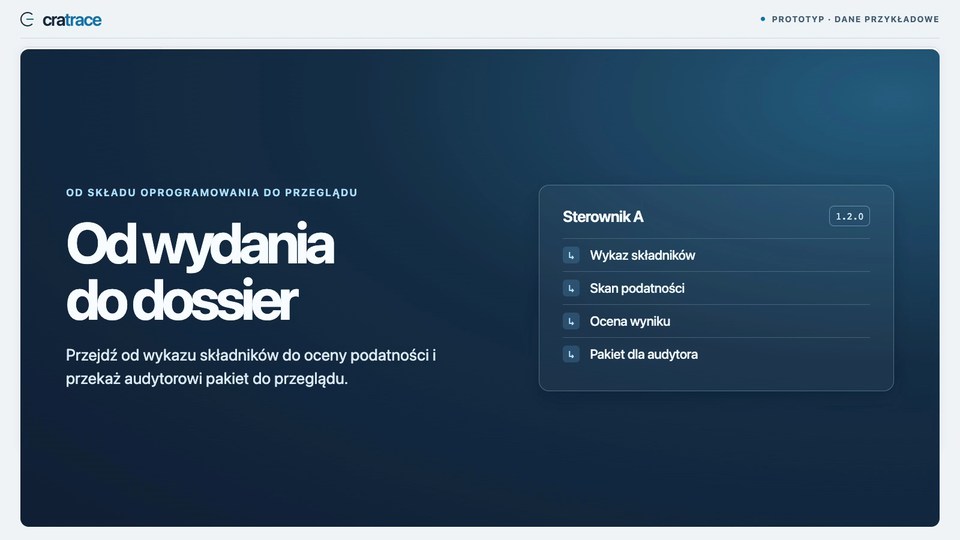
Import the software inventory, scan for vulnerabilities and review a finding. See the auditor download the resulting dossier.
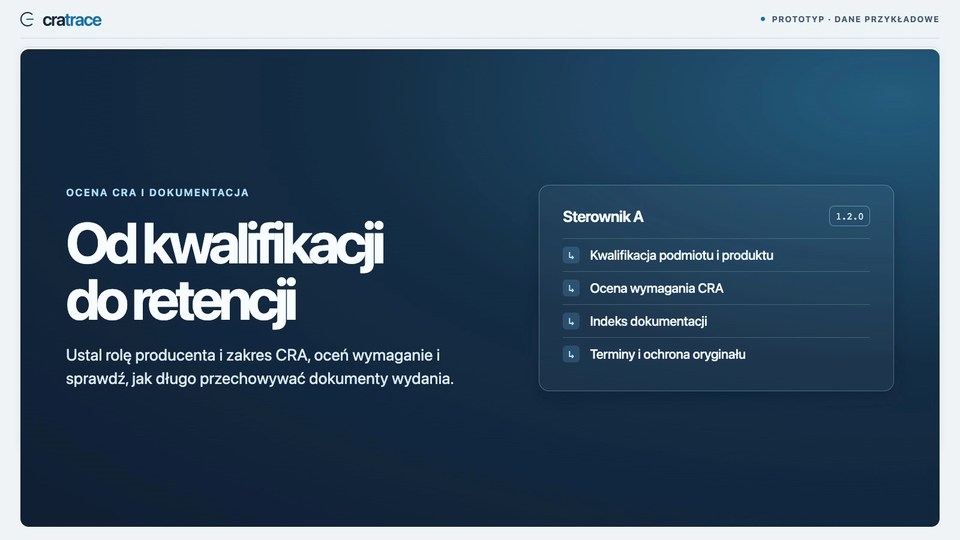
Record who is responsible and how the product is classified. Review a CRA requirement, link the supporting evidence and check how long to keep it.
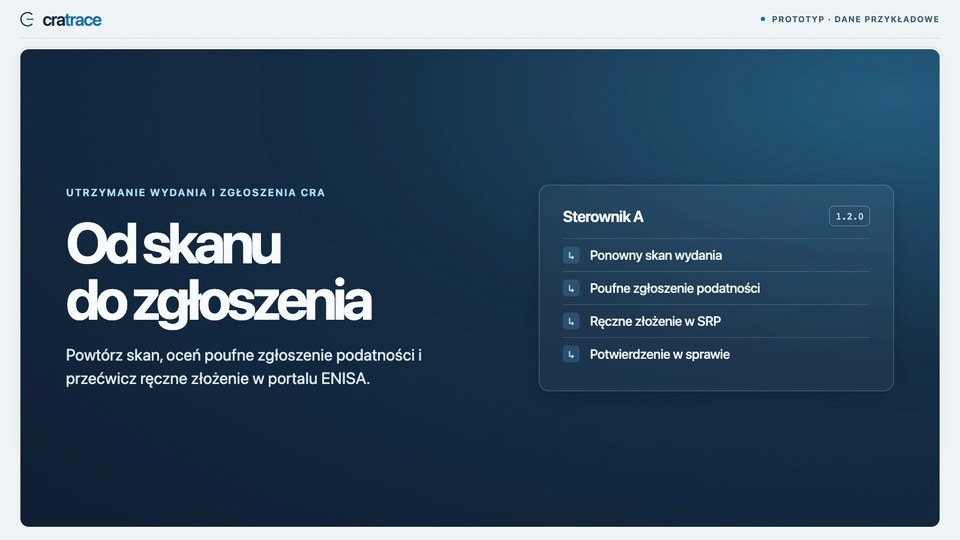
Compare repeat scan results, review a confidential vulnerability report and practise submitting an early warning manually through ENISA’s reporting platform.
Five questions to clarify the main scope conditions. No account or company details required.
The result is an initial indication, not a binding legal determination. Ambiguous cases are left for further assessment.
Here we are building the tool. Guides, explanations and articles belong in our separate knowledge base.
Your company’s role, how the product is made available and its dependencies on other services help frame the right questions.
Explore the knowledge baseThe list matters, along with its source, version and relationship to the finished product.
Explore the knowledge baseImpact assessment, action priorities and rationale. A list of findings cannot replace product knowledge.
Explore the knowledge baseThe nis2cra.com knowledge base is being developed alongside cratrace. Access to its content is currently restricted.
Building software, devices or embedded systems? Let’s discuss how you collect information, make decisions and prepare evidence today.
The platform is in development. Pilot scope and availability are agreed individually.
A general description is enough to start. We will agree on how to exchange documentation and technical material later.
Loading the form… If it does not appear, use the email address below.
cratrace is in development. This page presents the direction of the platform and opens a conversation about a pilot. The scope screening tool is available now.
cratrace is intended as a workspace for products, decisions and evidence. We are developing nis2cra.com as a knowledge base. The two complement each other and serve different purposes.
No. It clarifies the basic scope conditions. It does not determine the product category, conformity assessment procedure or full set of obligations. Sectoral exclusions, open source and service-based solutions may need a separate assessment.
The result is calculated in this browser. Your answers are not sent to a server or retained after the page closes. You can download a summary to your device.